

NECROPOLIS: The Sketch Shoot
How to Use a Pre-Shoot to Get the Best Coverage on Your Non-Dē Production

“Sing to me, muse…”
Any artist can suffer from the fallacy that inspiration will strike in the moment. They might tell themself, “I’ve done this before. I know what I’m doing. I can just show up and make it happen!”
Not My First Rodeo, Bro…
You may think that your first idea is great, but like it or not, the more time you spend iterating on your plans, the more nuanced and interesting they become.
Given the expense and coordination required of filmmaking, preparation is all the more necessary to create a successful project. Just like painting a great work of art.
Every great painting starts with sketches and studies, because even Neoclassical French painter Jacques-Louis David needed to work out his ideas. Are you really better than Jacques-Louis David?
I know I’m not! So let’s sketch.
The Death of Socrates
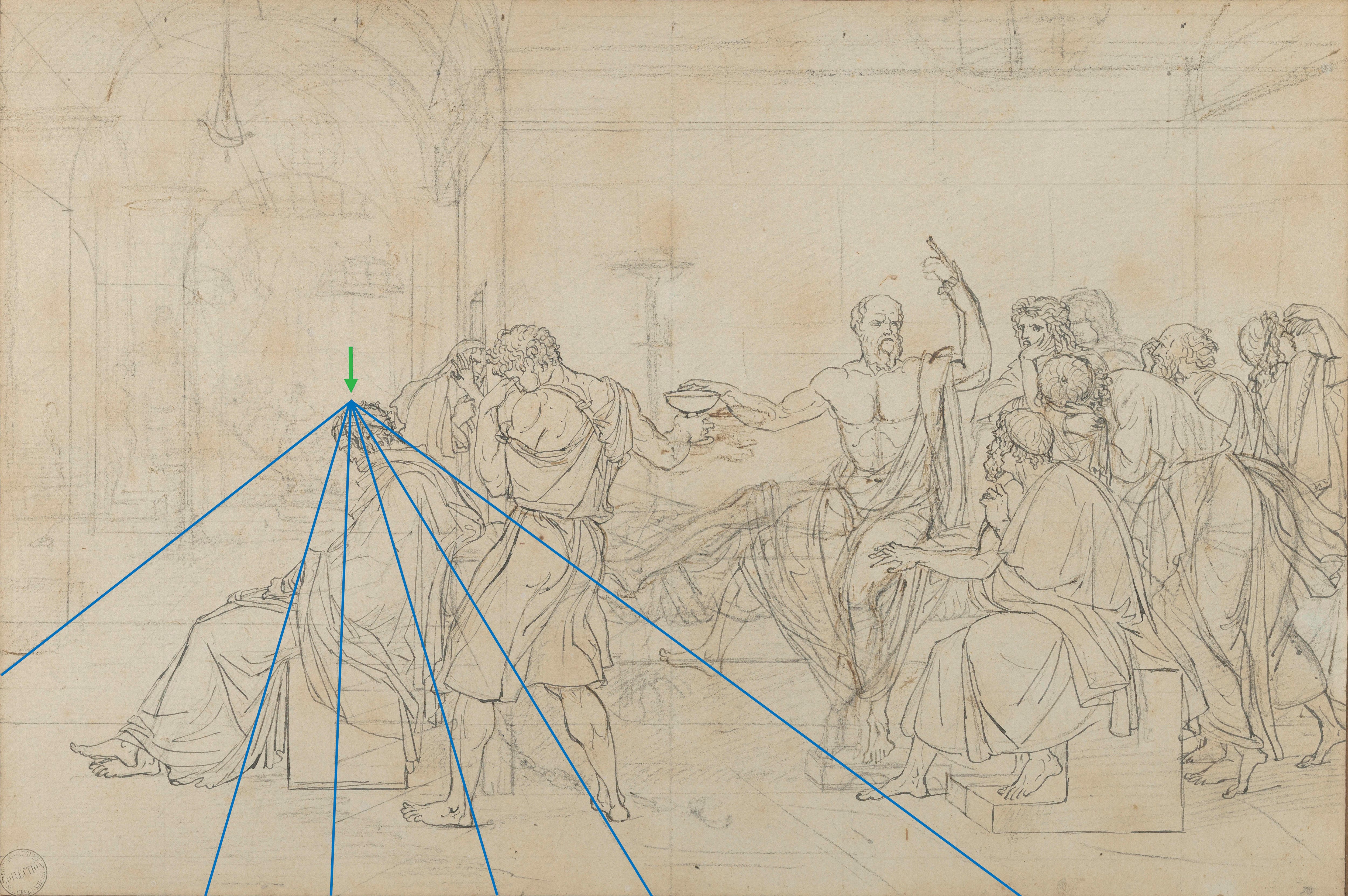
Study the images below - what did David improve as he developed his dynamic painting about ideals conquering death in his 1787 masterpiece, The Death of Socrates?
The setting and general composition remain the same, but every detail is enhanced by his iterative process. Let’s start with the body language of our central figure - our eyes go right to Socrates because he is in the middle, he is brightest, he is slightly higher than the group, but most importantly, his hand is raised in defiance. He is killing himself to make a point, so he is pointing to the heavens, using his final moments to argue for the immortality of the soul.
The human authorities can kill his body, but they cannot kill his mind.
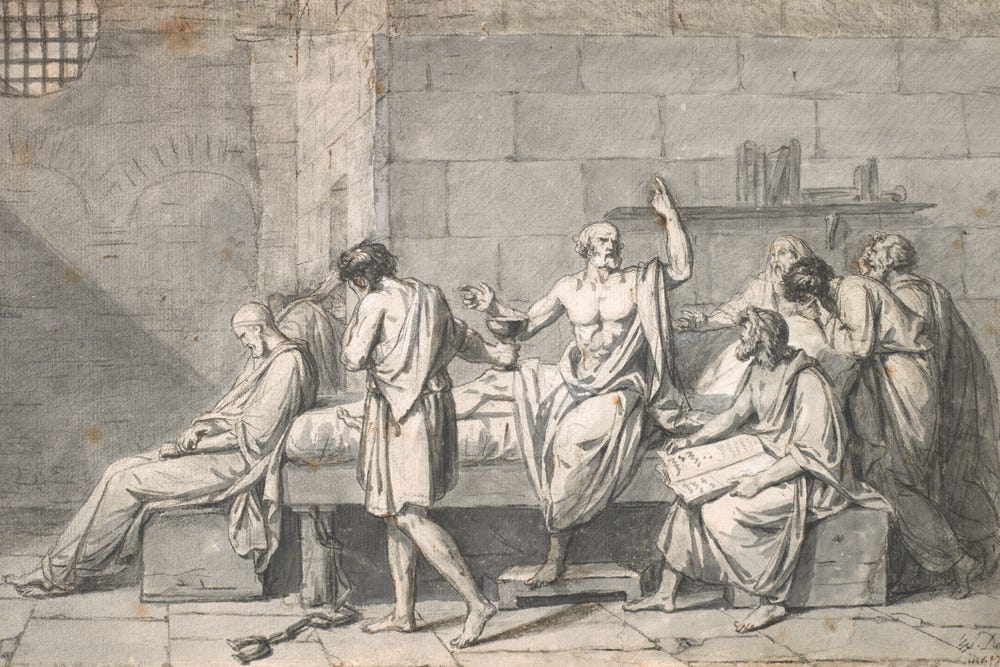
Study the students who surround their teacher and look at how the narrative is enhanced with each one, starting with Plato, who sits forlorn at the foot of the bed. In the sketch, he leans back, looking more relaxed than in the final painting, where his forward slouch conveys a deeper resignation and sadness.
Plato’s head also serves as the vanishing point for the single-point perspective of the arched hallway that features Socrates’ family members, who ascend a distant staircase - another detail that was not in the original sketch. This addition adds visual depth that mirrors the narrative depth - and according to X-ray scans made by the Metropolitan Museum of Art, David reduced the number of figures in the background, erasing a mother and child who art historians think could have been Socrates’ wife and youngest son.
Simplify to get to the heart of your statement.
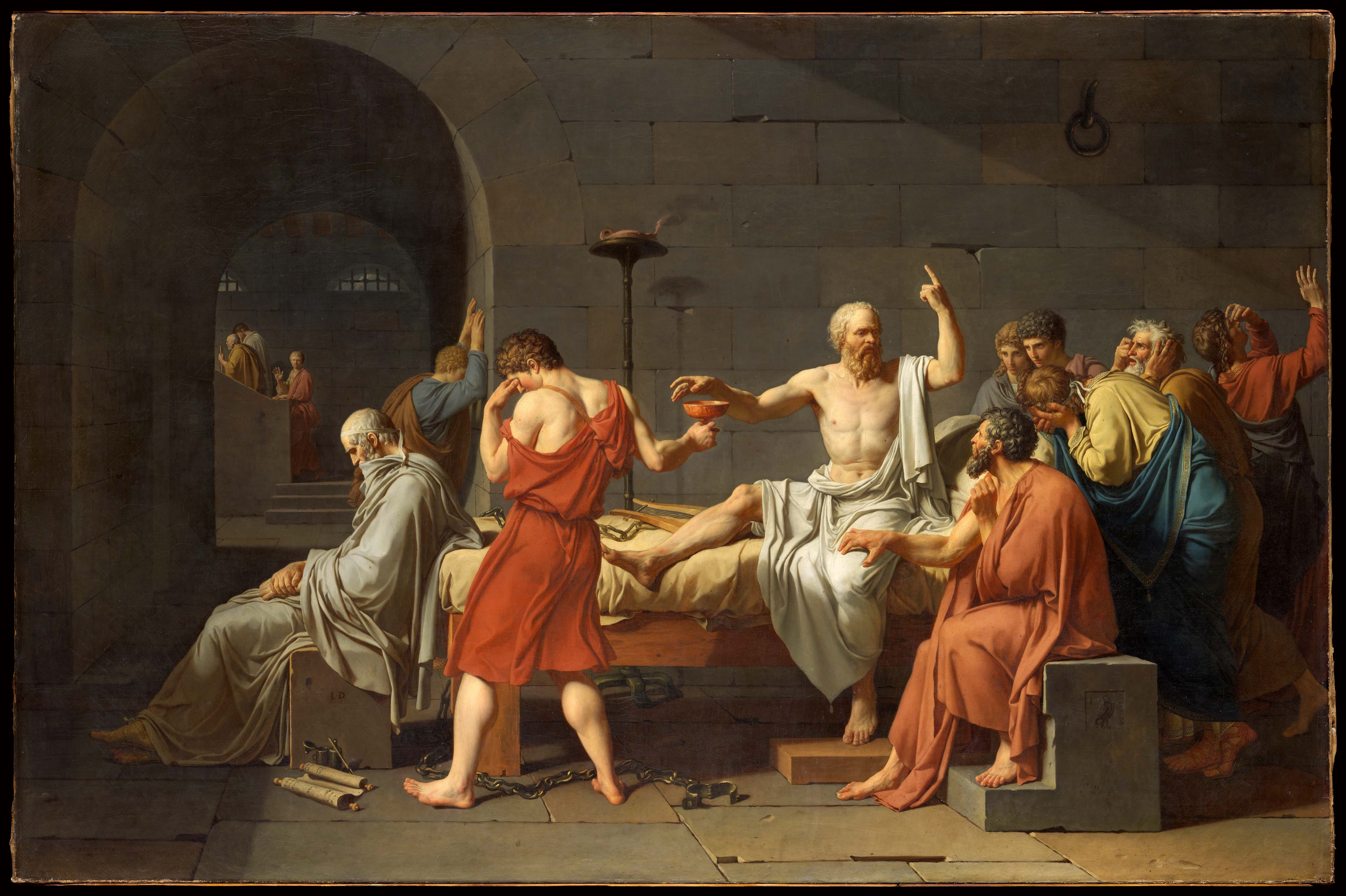
Now study the final painting and notice how the composition has developed into a dramatic, decisive moment. The anguish of each student is heightened by their overlapping positions, and the colors they wear stand out from the stone background and help us notice their emotional reactions.
Look how the wall behind Socrates is now bare and severe, gone is the distracting bookshelf, and according to X-ray scans, an iron ring has replaced a window, thematically connecting to the chain that rests on the floor. A dramatic shaft of light further emphasizes our central drama, reaffirming the centrality of the composition.
Makes me want to read some philosophy!
A One-Year Filming Delay - For the Best
Last year, director Jay Stern shared a project with me that he hoped to shoot on the Greek island of Syros. It was still in development, but he was excited to move forward with the shoot during our winter break from teaching duties. But as the planned dates approached, the script was still an outline, and the ideas were still incomplete. We had to take a hard look at what we were setting out to do.
Surely the Muse would reach us on Homer’s turf…
Our first idea had been to improvise the story as we shot, as we had made five other features together, along with dozens of short projects, but those ideas were quickly abandoned. It would just be a waste of money and produce a project that no one would screen. These days, it’s too easy to shoot, so every festival or venue is overrun with half-baked films (16,000 entries to Sundance every year!).
We didn’t want to add to that mess.
So we decided to travel to Syros for a scout and pre-shoot the most important elements of the story that we had so far, without the pressure of needing them to add up to a compelling feature.
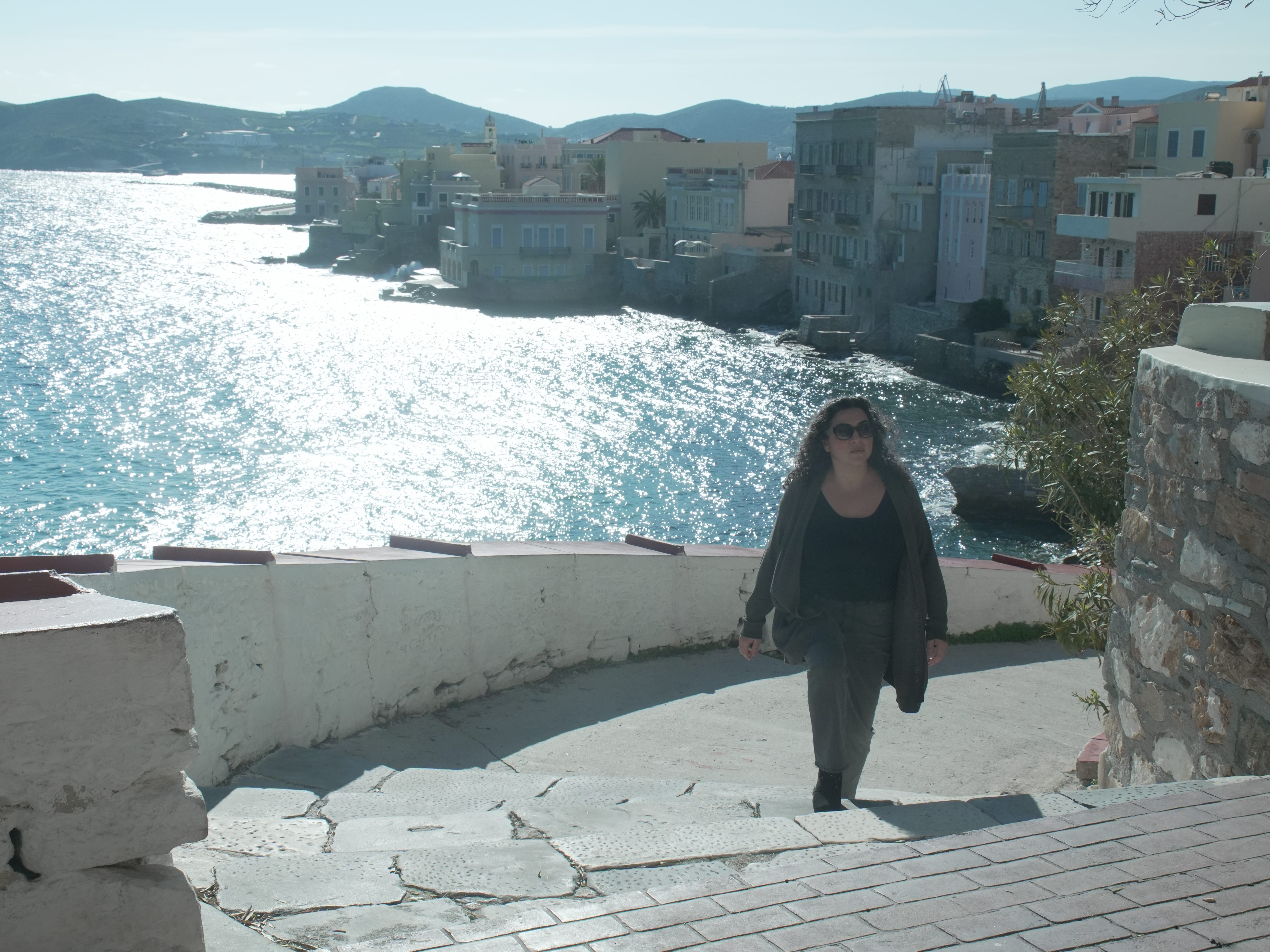
Jay and his story collaborator, Annie Levy, had first visited the island a decade prior as directors in the World Wide Lab, a collaborative theatre group that had spun out of Lincoln Center Theatre Directors’ Lab. Two of the lab’s local hosting producers, Thanos Foskolos and Penelope Aslangolou, had been begging Jay to return to make a film in Syros, but when he tried with a larger project in 2017, the remoteness presented too many obstacles and expenses.
So we knew we had to keep it small and quiet, and let the location do the talking.
I had been to mainland Greece, but not Syros, and while the photos looked intriguing, I knew I was getting a limited understanding of the location from pictures alone. Just try visiting a New York apartment for rent after seeing the realtor’s wide-angle deceptions, and you’ll know what I mean.
Winter Light - Get to Know Your Location
When I scout, I like to inhabit the space, spending time during different periods of the day, and take long enough to get past my first impressions. I need to stand or sit in different areas, thinking about how the camera angle can tell the story or introduce us to a person in their space.
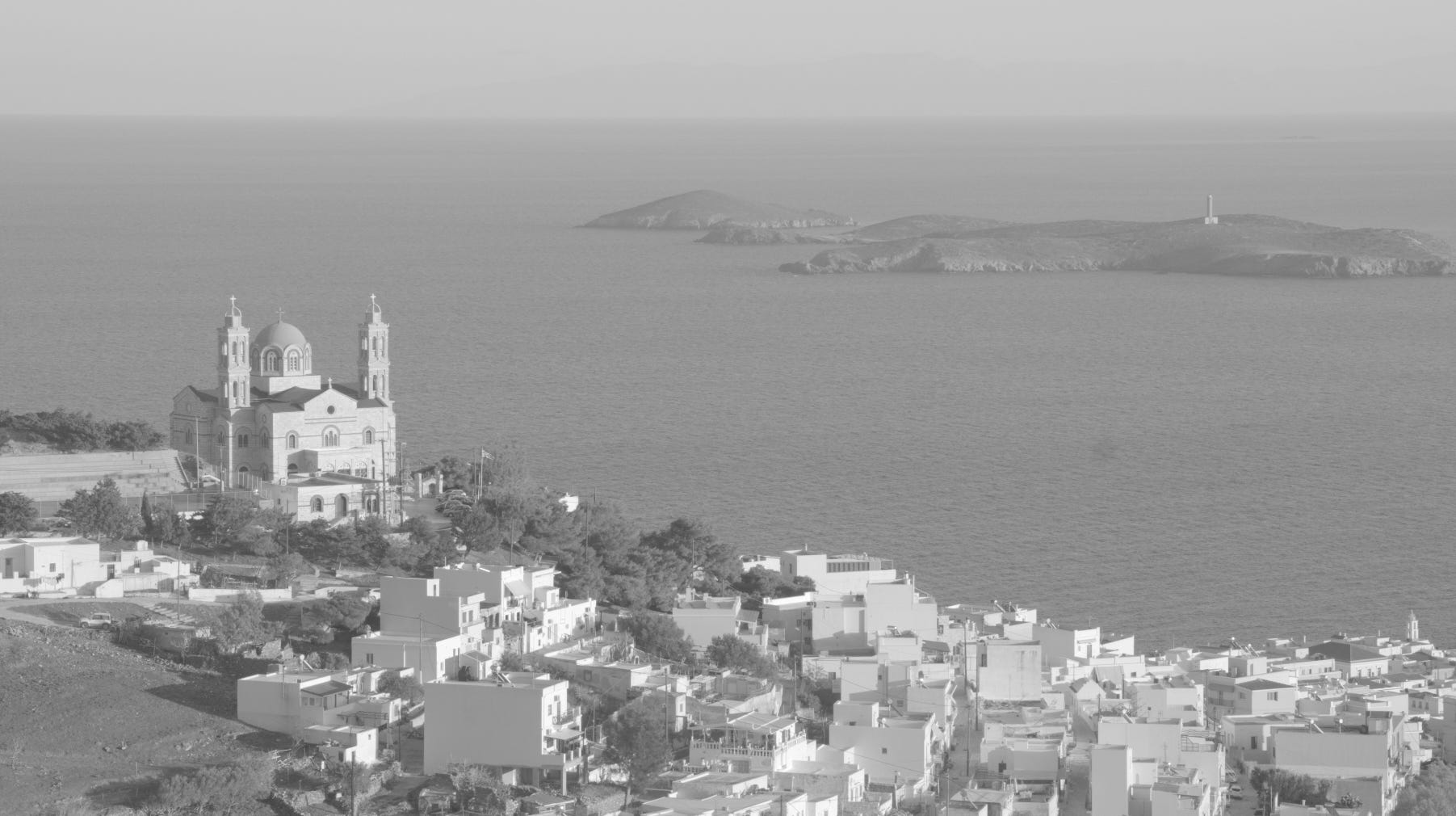
Are they new in town or a suspicious old timer? Are we aggrandizing the room or trying to make it feel cluttered and compact? What kind of light comes through the windows at this time of year?
We were lucky to shoot with winter light in Syros - the sun rose over an island in the bay and stayed low, crossing the city but staying directionally consistent for most of the day. I like to shoot with backlight whenever possible, especially in day exterior situations, so we were able to plan our shots knowing that the sun would be helping us out.
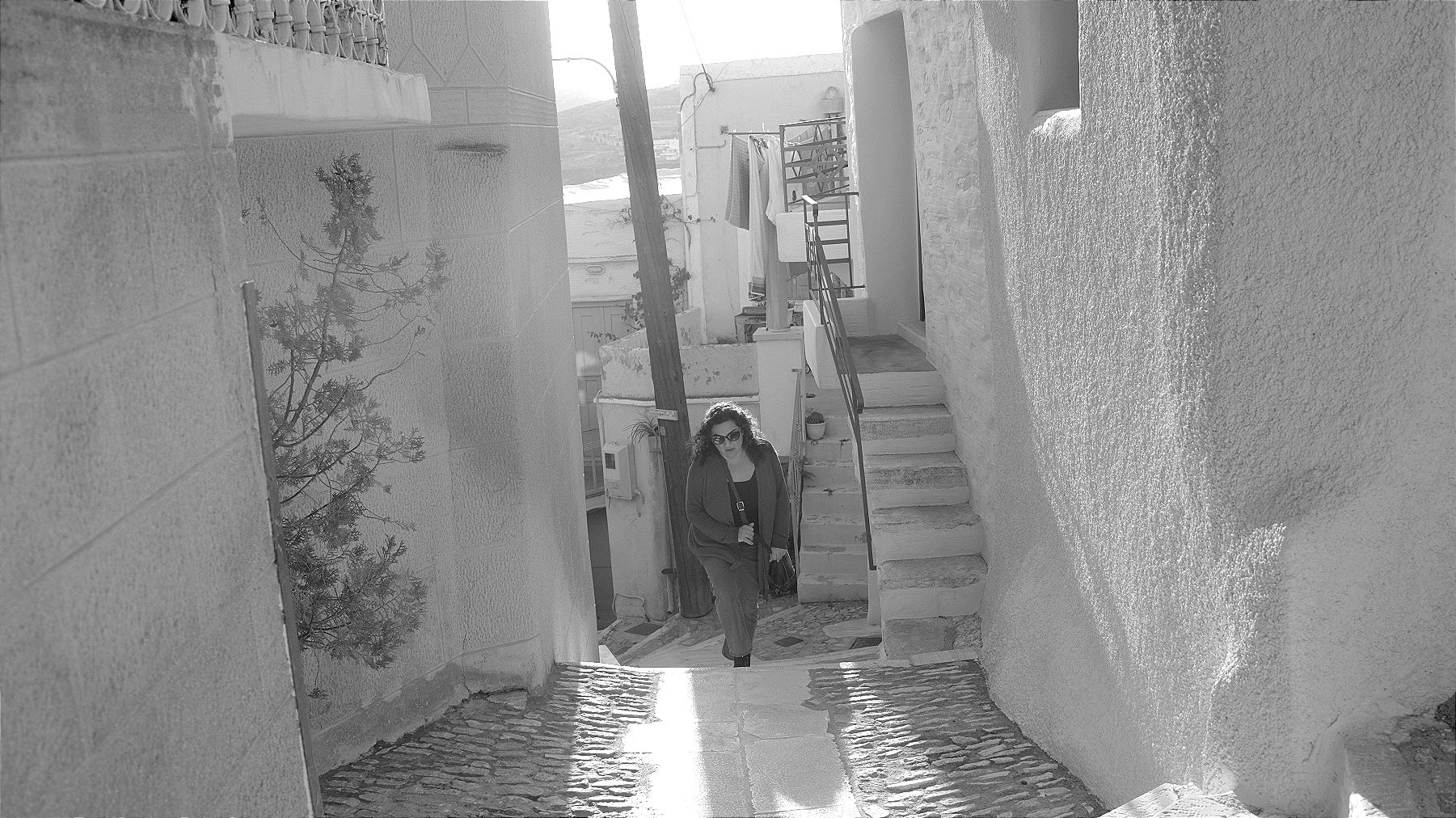
Not only does backlight romanticize the subject, but it also provides a sense of mystery that fit with our story, and on a practical level, it helps our subject stand out from the rest of the frame, especially when I was shooting wide shots with deep focus.
The locations we needed to scout and shoot were varied, from a port city to an empty hillside village with a maze of staircases, an uninhabited monastery, a cemetery, and a cave that could believably lead to the Underworld. Definitely not places we would want just to show up and wing it.
We traveled to the island by ferry, and since the film opens with Annie’s character, Mara, arriving by boat, we filmed shots of her on the empty deck. This was our first indication that we would need to look a little deeper - the boat felt too “normal” for the film’s introductory images.
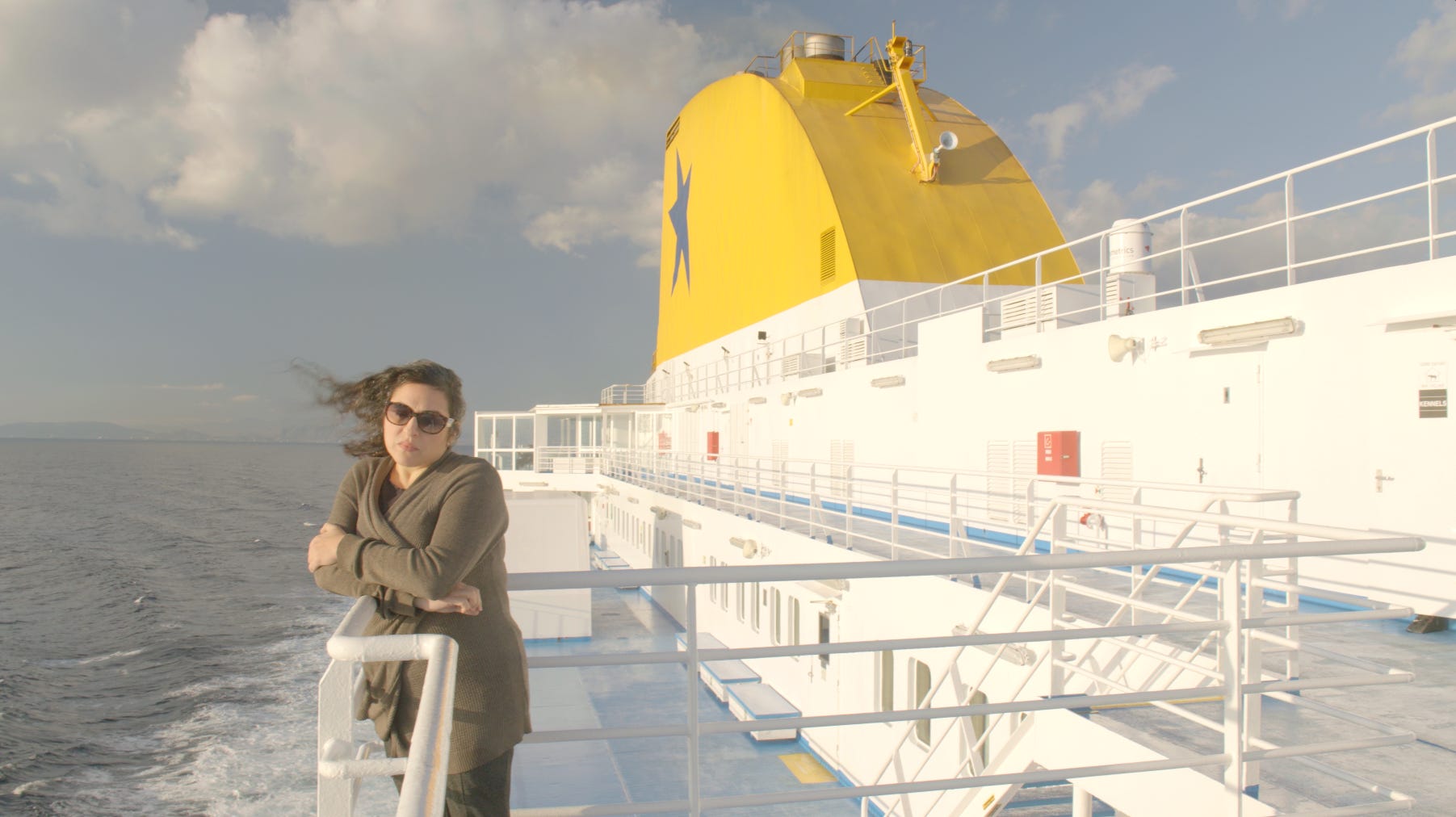
There was a practical concern as well - the ferry serves all the local islands and only stops for a few minutes, with crowds of passengers, cars, and trucks frantically disembarking. We got a hurried shot of Annie walking off the boat, but a porter was yelling at her to disembark, and I was barely able to focus the lens in all the chaos.
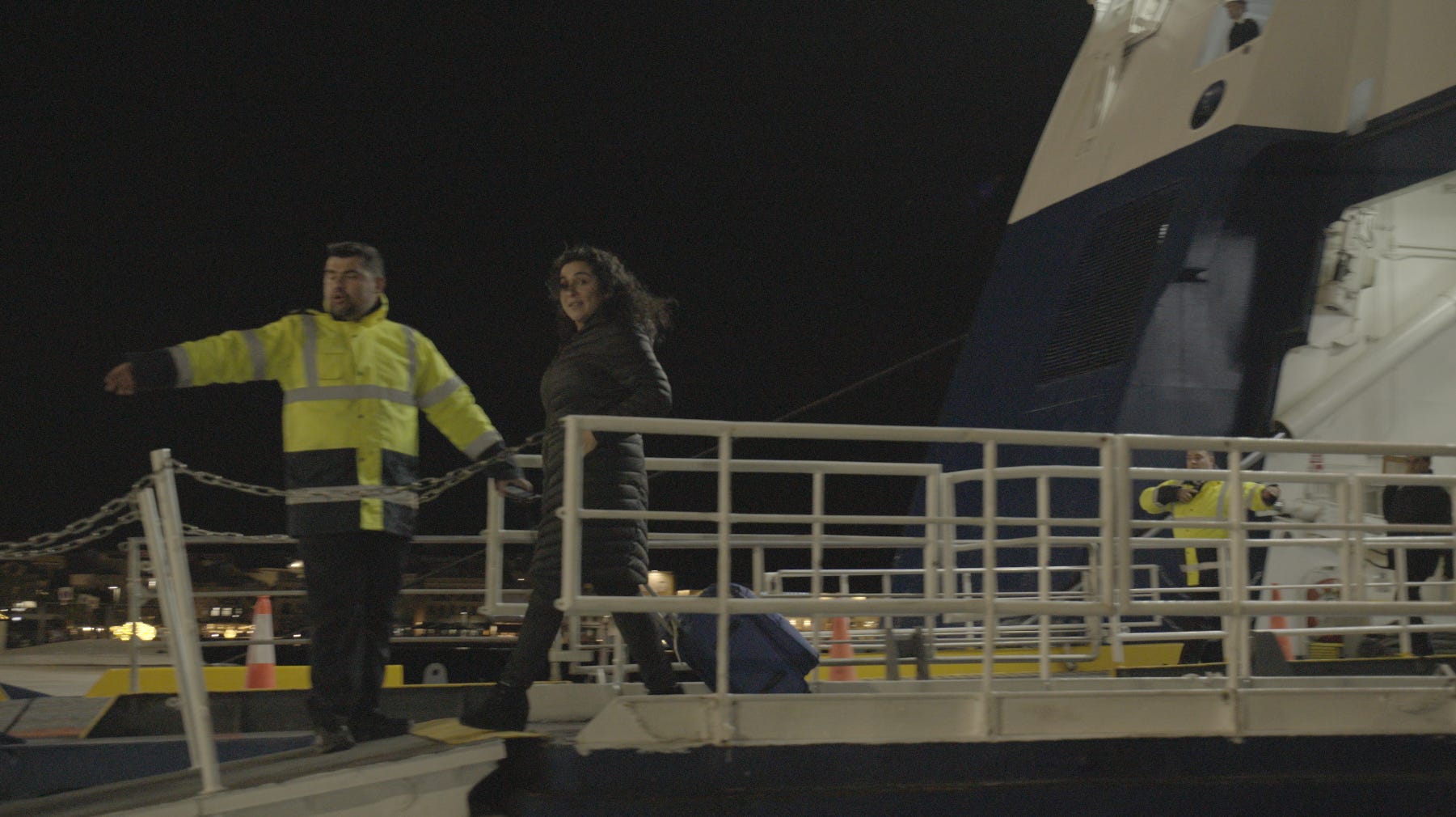
This was not the way to start our film, surrounded by the chaos of modern Europe, featuring tourist cafés and restaurants, but we did learn a valuable lesson. We needed to control our setting to bring the audience into the story.
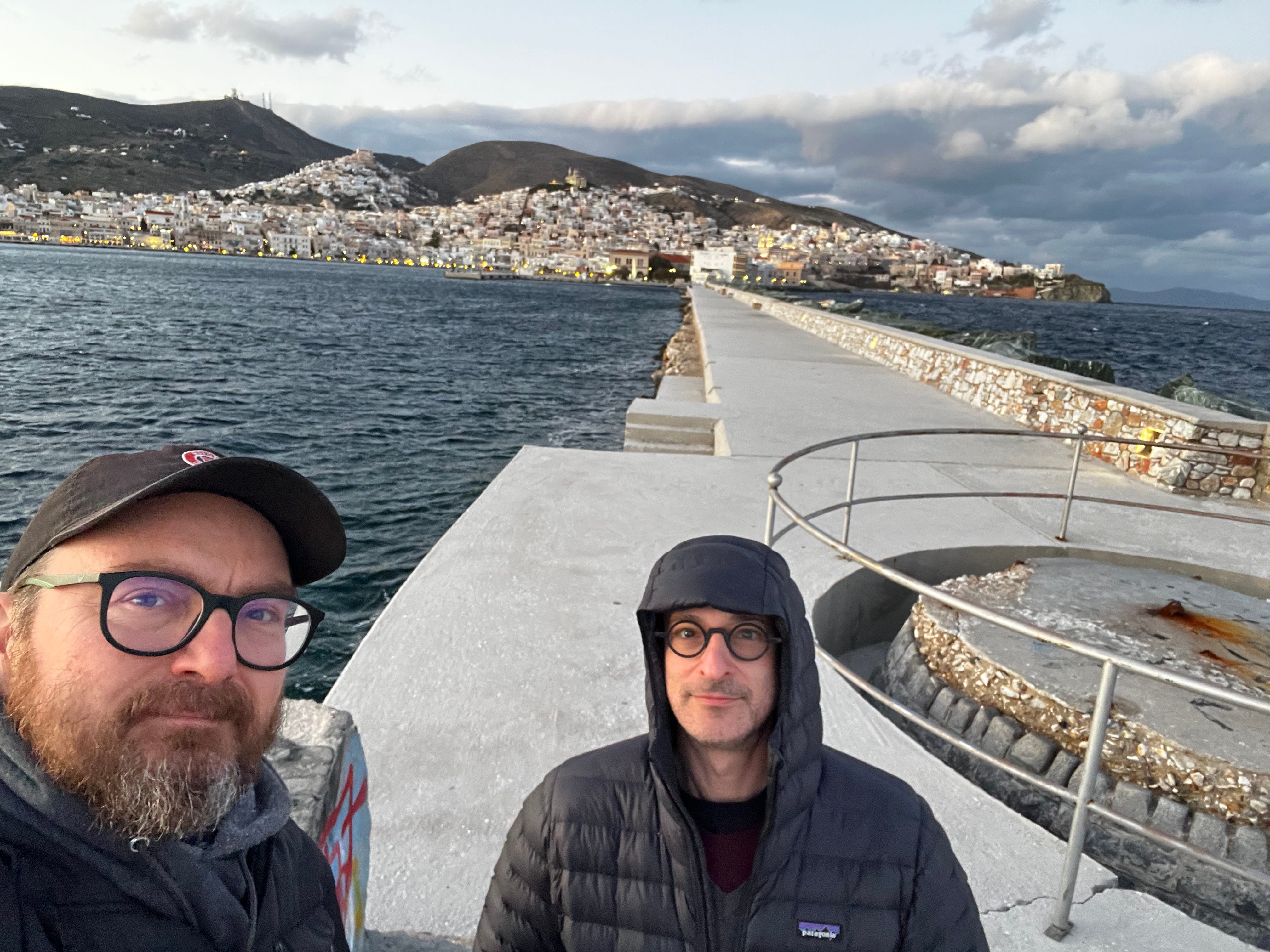
One evening after scouting, Jay and I took a walk out on the jetty that protects the bay, and we found our answer. Far away from the city center, there were small staircases that led down to the water!
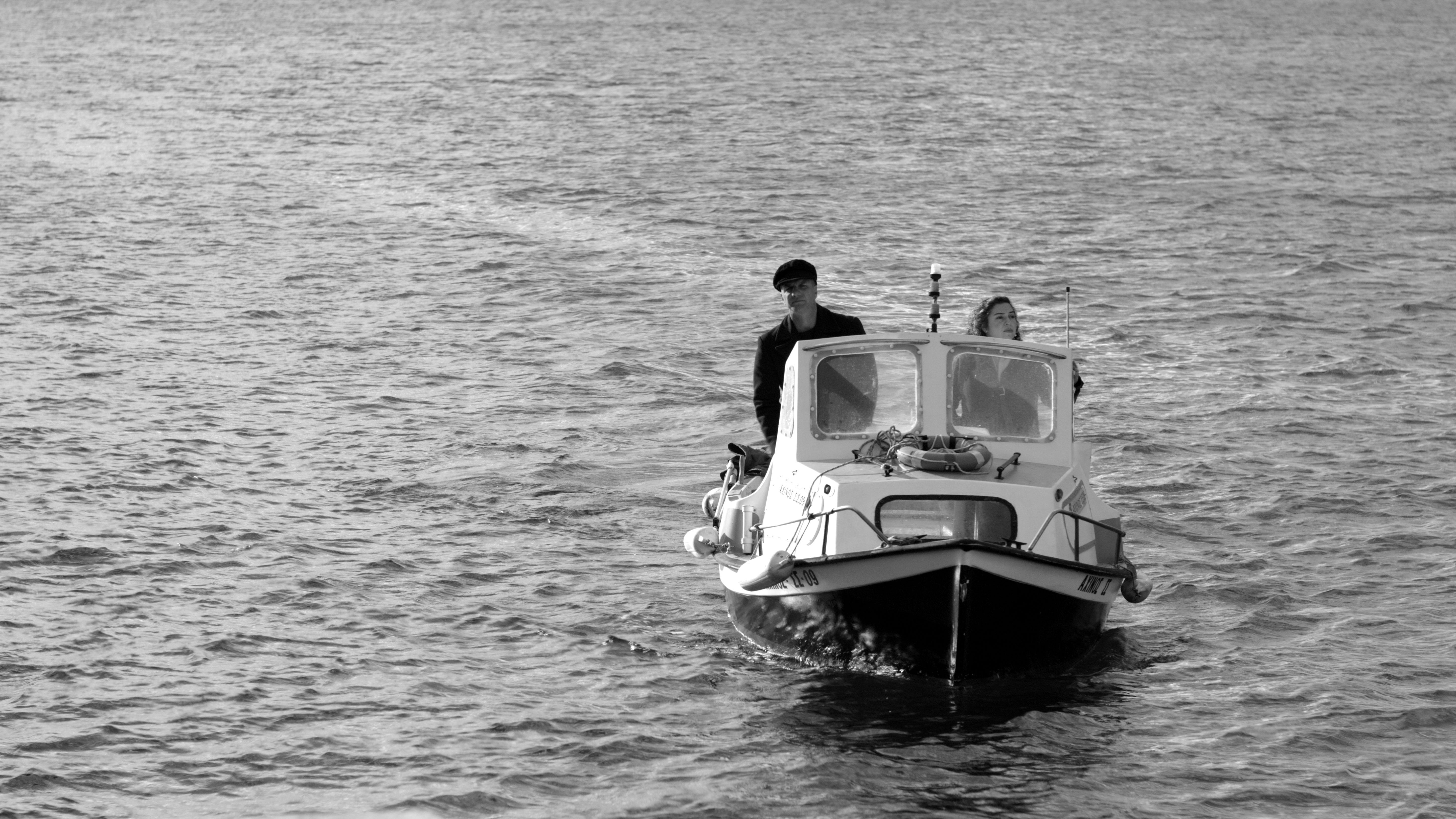
Perhaps we could get a smaller boat to film our opening scenes with Mara arriving at the empty pier, introducing the city in the distance. I shot a video of Jay playing Mara so that we’d remember.
Thanos and Penelope helped us find a small fishing boat, which gave a more personal and mysterious entrance for Mara’s character and arrival on the island. It feels intimate and timeless, not like a typical tourist trip. Shooting on such a small boat was certainly difficult, but well worth the extra effort.
The Crossroads
Always take walks! It’s good for your heart, brain, and digestion - and good for your coverage as well.
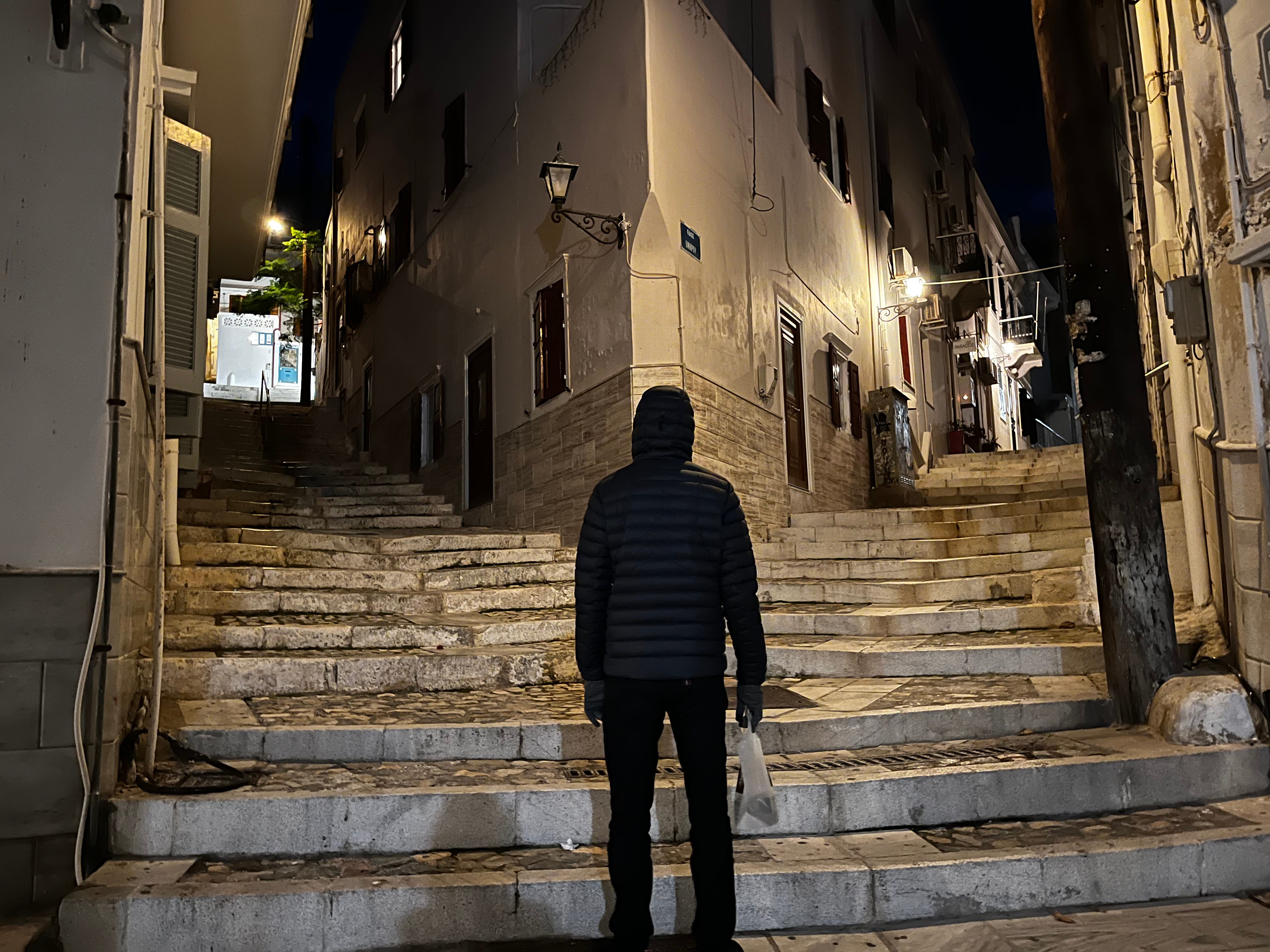
One night, Jay and I were wandering the town after dinner and found the most amazing “crossroads” location. We had already found some great staircases to shoot near the hilltop monastery, but were not sure of how we would get Mara from the port area all the way up there. We also wanted to emphasize her confusion, as no one from the residency had met her at the dock, leaving her to figure it out.
I got a shot of Jay standing in, so we would remember to shoot it, and on day one of the real shoot, this was one of the first frames that we shot to begin the film. Everyone can identify with this moment, not knowing which path to take, and hoping that you chose the right one.
Getting these types of universal shots in your film will give your story a common understanding. Any audience should be able to follow along and identify with the protagonist’s struggle.
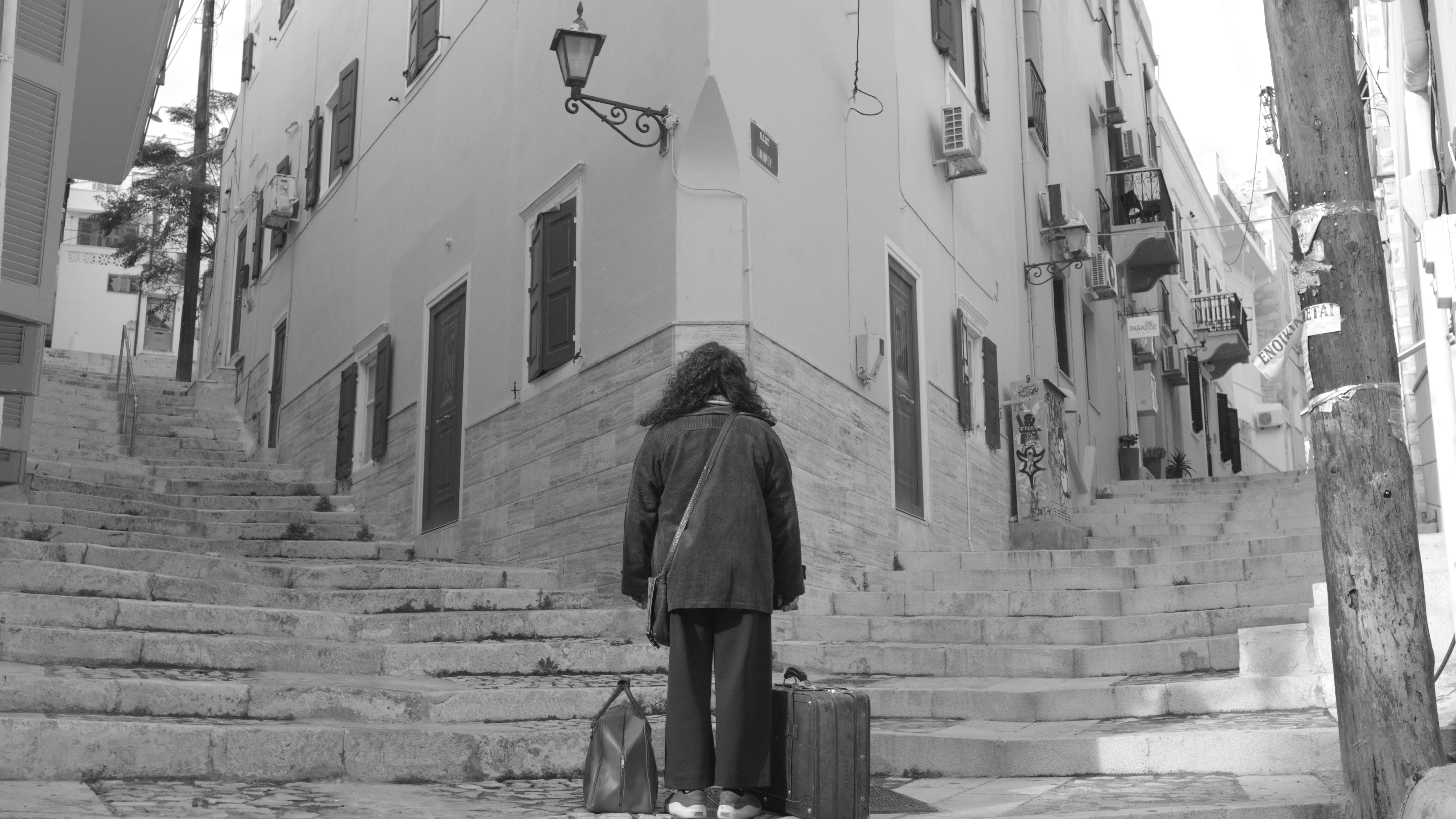
We moved Mara up three steps in our final shot for compositional clarity - to emphasize the fork in the road with steps ascending in both directions. This prompted us to tilt the camera up, emphasizing the heights that she was about to hike.
Making her smaller in the frame with more headroom also helps the audience identify with her feeling confused and intimidated. I’ve been here in my life/career many times! Haven’t you?
The Neoclassical Building
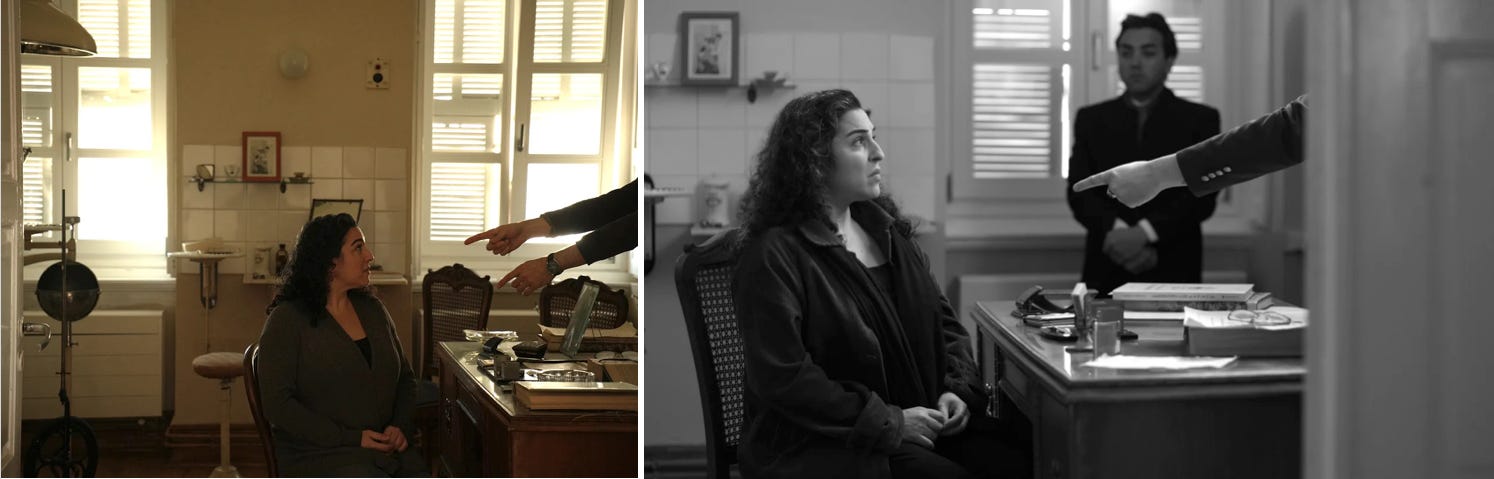
An important location in the story is the office of the Residency Director, who berates Mara for turning her art project into an obsession with death. Jay only wanted to see the director’s hands in the shot, which we got better the second time around, using the door to block his body rather than the edge of the frame. Seeing the door emphasizes that we aren’t seeing the whole picture, helping us identify with Mara’s situation.
The final composition feels more cohesive, focusing on Mara’s reaction without giving too many details of her surroundings to distract us, and I love adding in the third figure (The Porter), who silently watches, adding to the feeling of judgment.
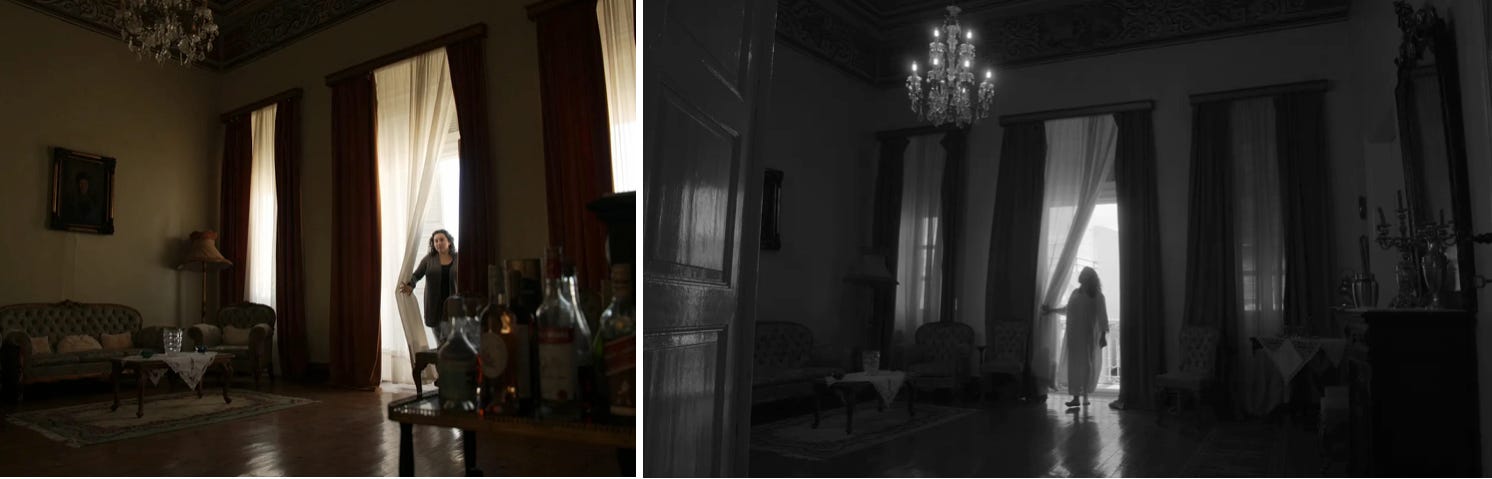
Mara returns to the Neoclassical location in a series of dreams, and again, the framing of our second shoot feels more striking and cohesive to me. In the sketch shoot, I was trying to frame with bottles as a foreground element, but in this situation, they distract and don’t add to the story. In the second shoot, I moved the camera back to take in more of the room and frame her entrance in the center, plus I like how the window reflects off the foreground door, adding another texture but without the distraction of bottles.
The shot is about her exploring a mysterious place; she doesn’t need a drink. She needs her lover back in the land of the living!
The Opera House
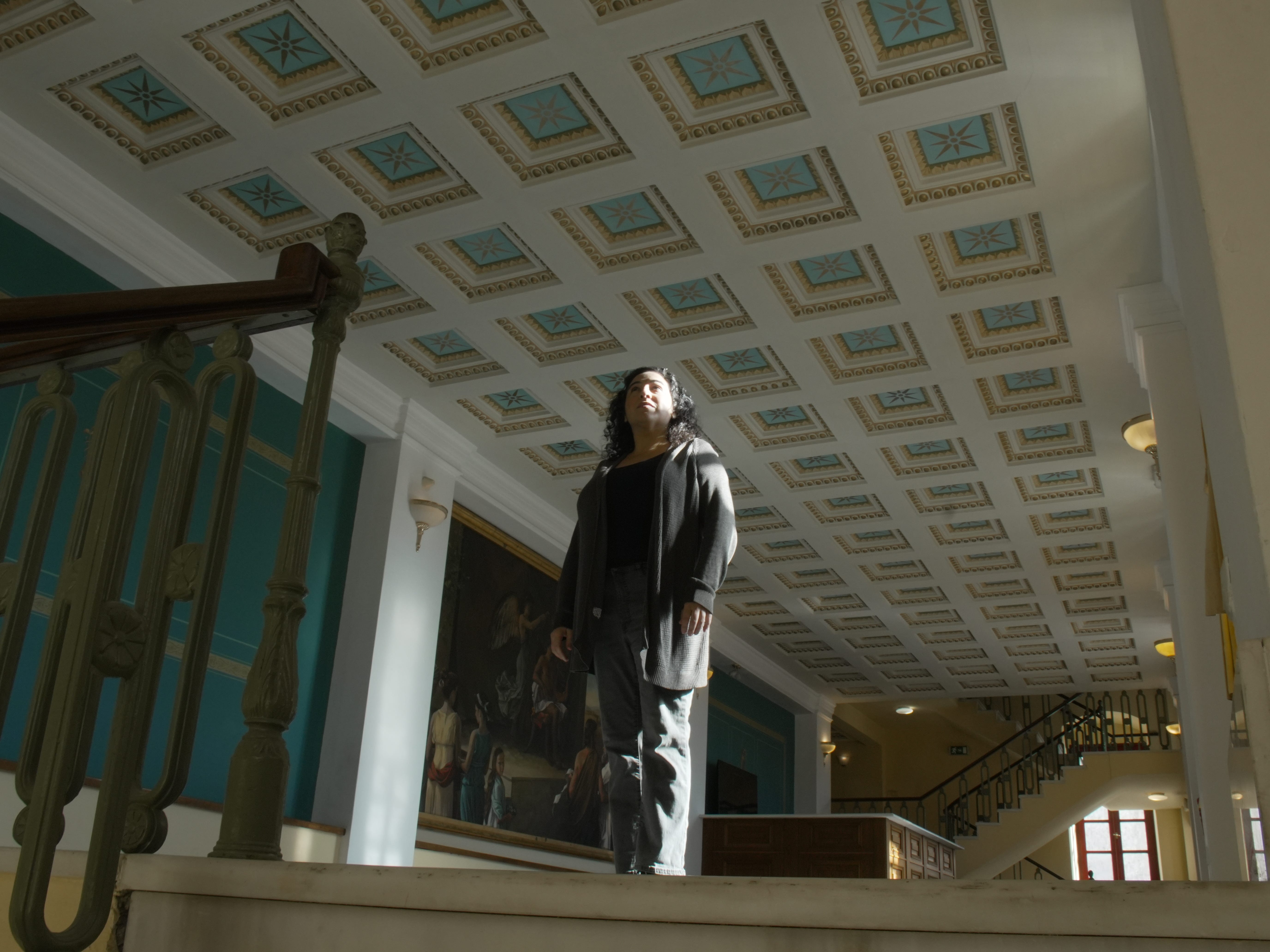
Not every sketch shot made it into the final movie - when we scouted the Opera House I fell in love with the lobby, finding many dynamic angles with my wide lens. But there were no compelling scenes that could take place there, since all the action of the sequence is on the stage. We could have added an entrance shot, but we knew that would just end up getting cut - remember the maxim arrive late and get out of your scene early.
Don’t waste your precious shooting time with “shoe leather,” those extra shots that will only slow down your story and will ultimately be cut out.
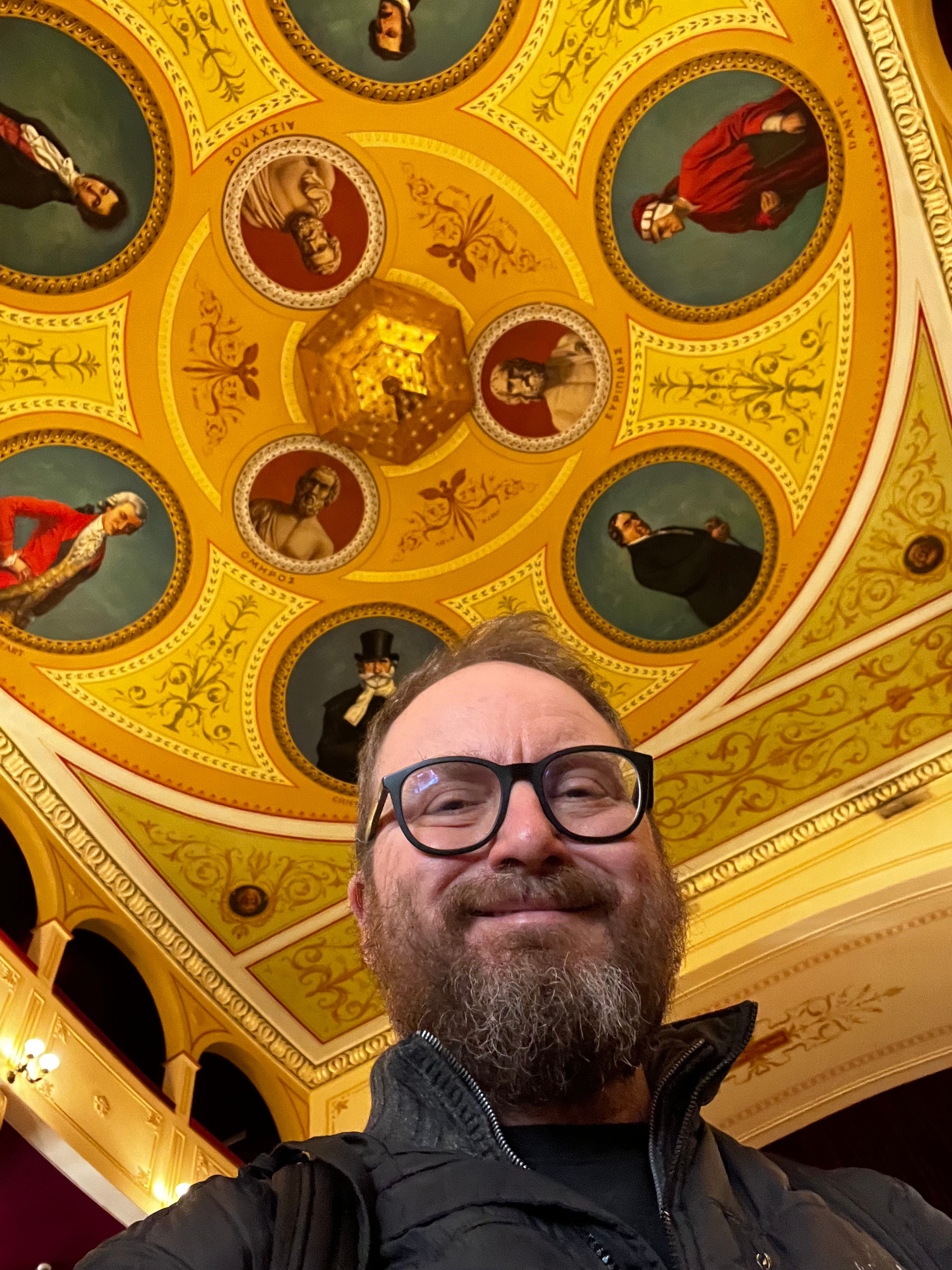
Syros’ Opera House dates from the Venetian period of the island’s development (it was definitely not built by the pirates, who used to inhabit the bay!). It’s a stunning golden room with murals of classical dramatists and composers painted on the ceiling, including Homer, Sophocles, Dante, Mozart (my childhood hero), and many others.
It was so stunning that I had to break character and take a selfie with the greats!
When we started shooting test shots in the Opera House, they were some of the most disappointing frames of our entire sketch shoot!
There was no way for the camera and lens to capture what it felt like to be in the room, surrounded by the golden glow. All I could see in the frame was a stage and some curtains. It could have been anywhere.
So I turned the shoot around and used the architecture to wrap itself around the townsfolk that Mara encounters and interacts with throughout the film.
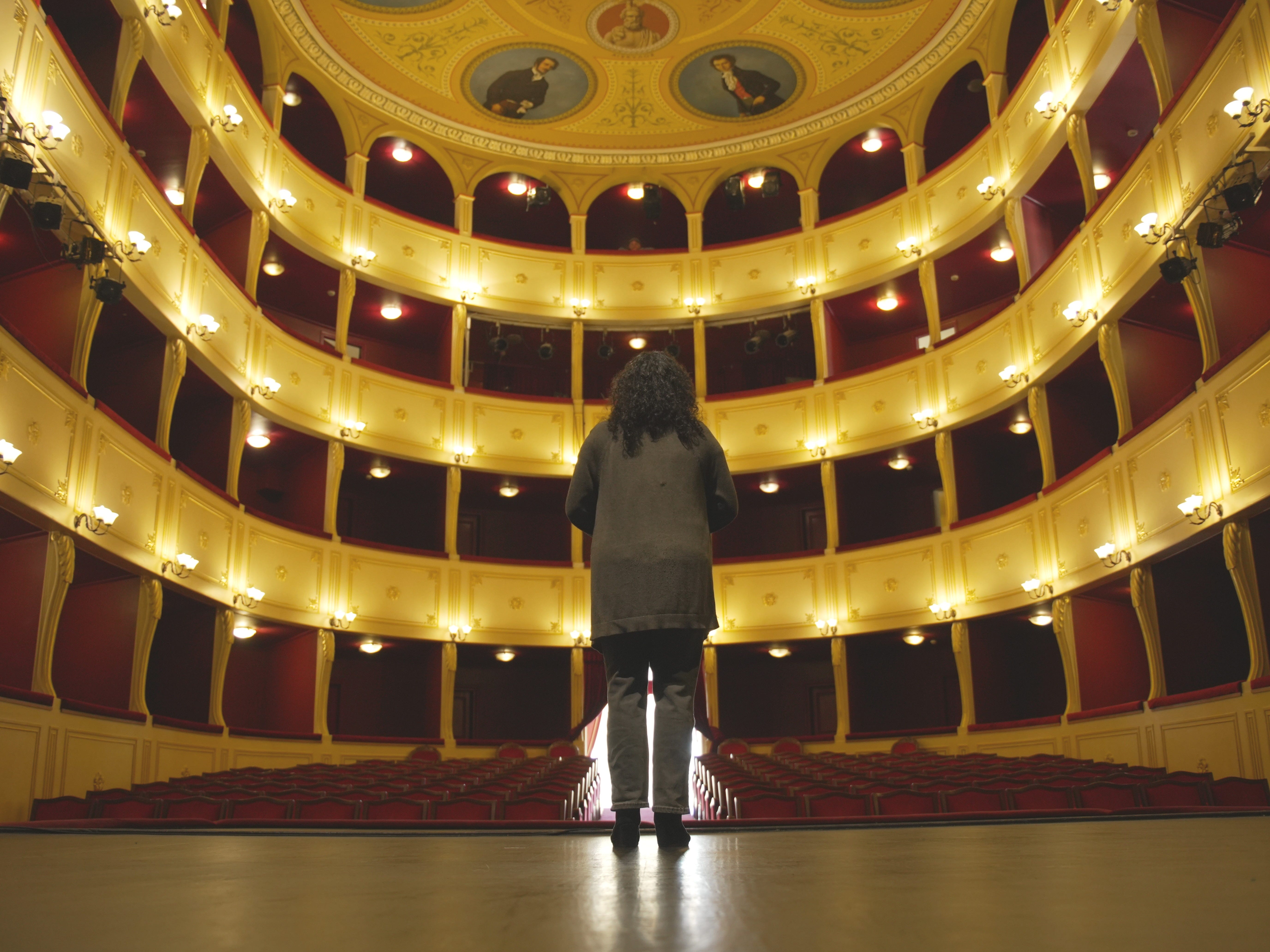
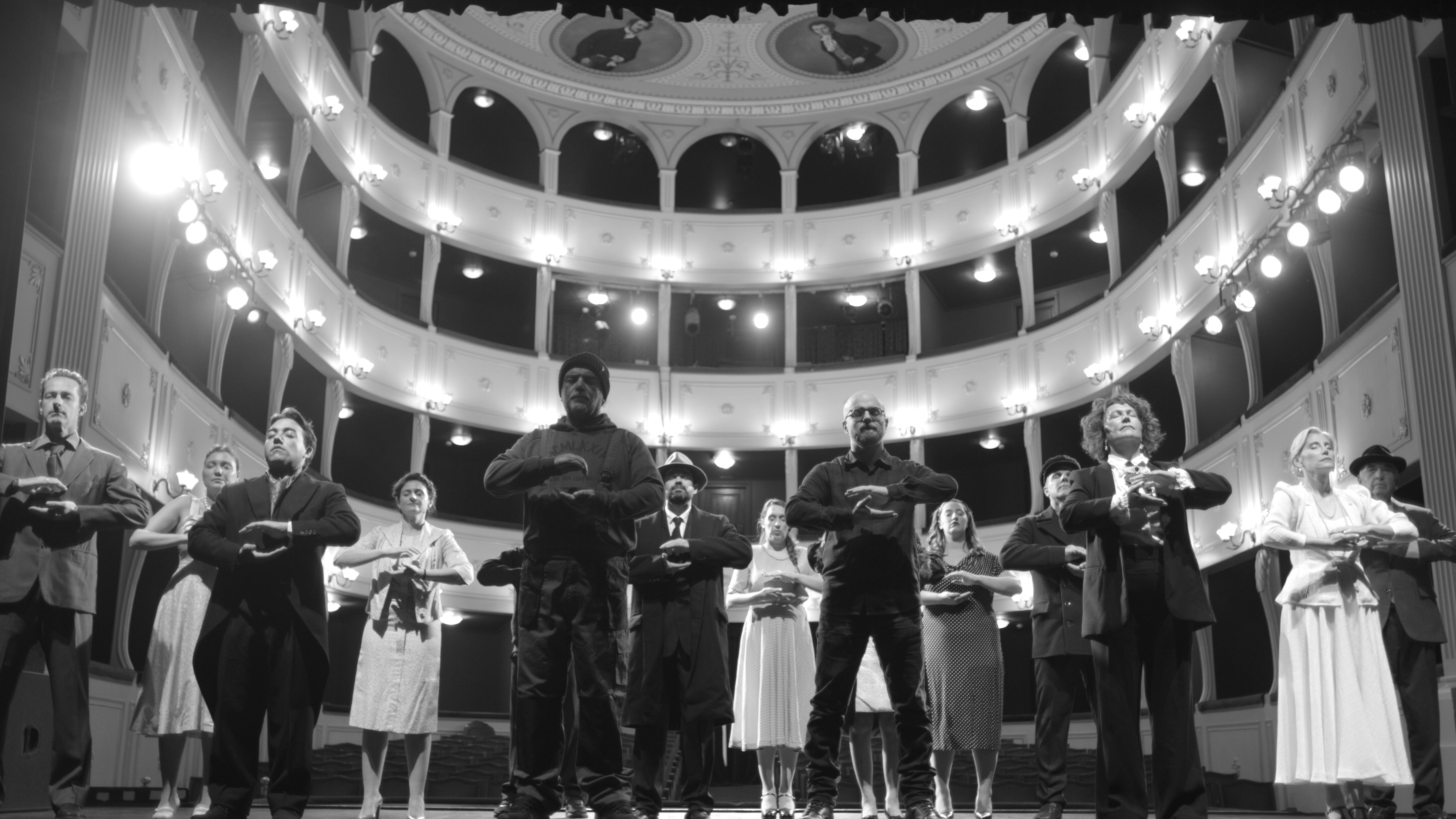
If I had been under production pressure to get a shot framed, I might not have had the thought to turn around. I tried shots from the back of the house and in upstairs balcony boxes before I thought to move the camera to the rear of the stage.
When it came time to do the real shoot, we only had two hours with everyone’s schedule, but it wasn’t a problem, because we knew where the camera needed to go and got all the shots with maximum efficiency.
A Bonus Family Vacation!
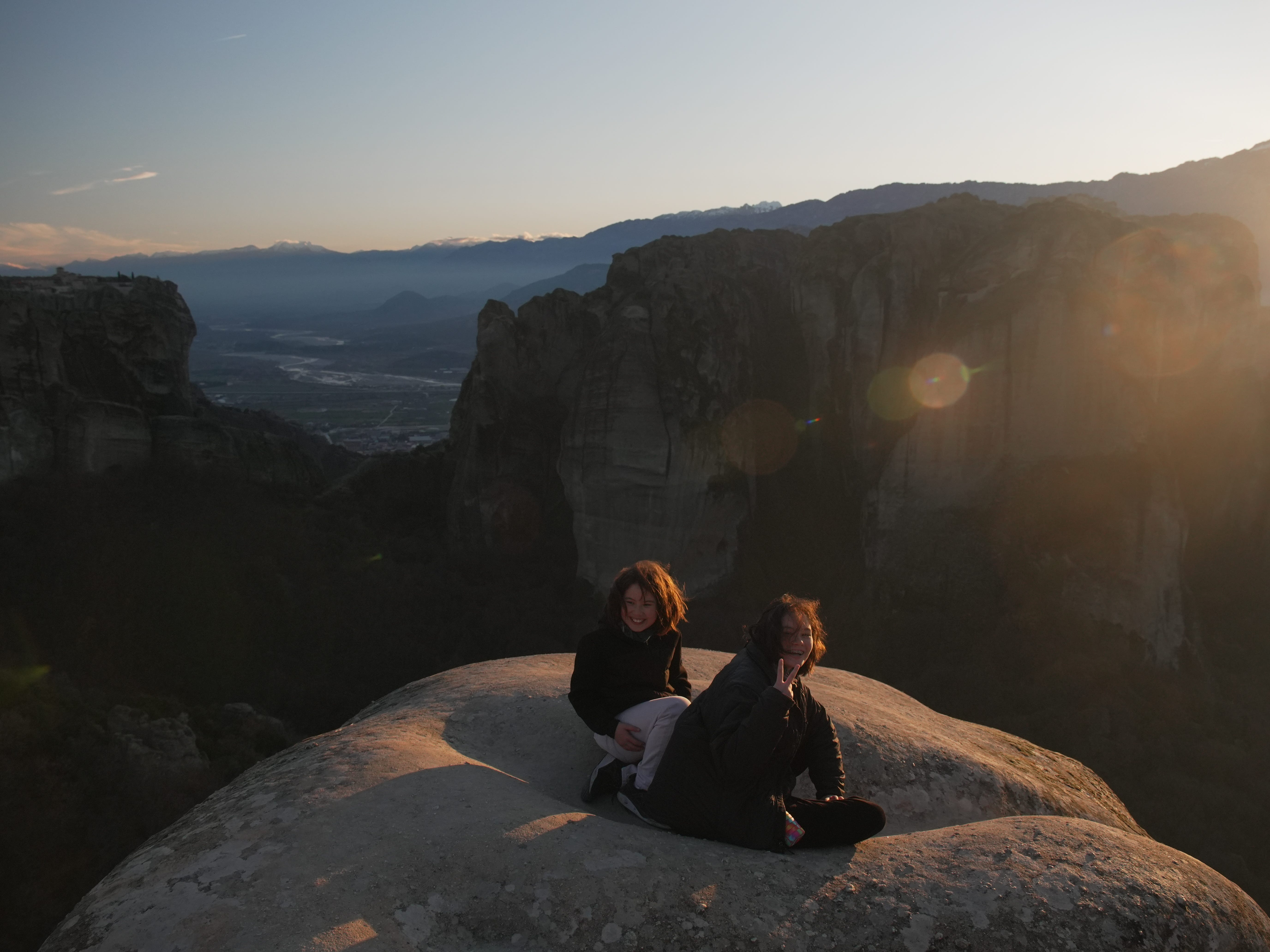
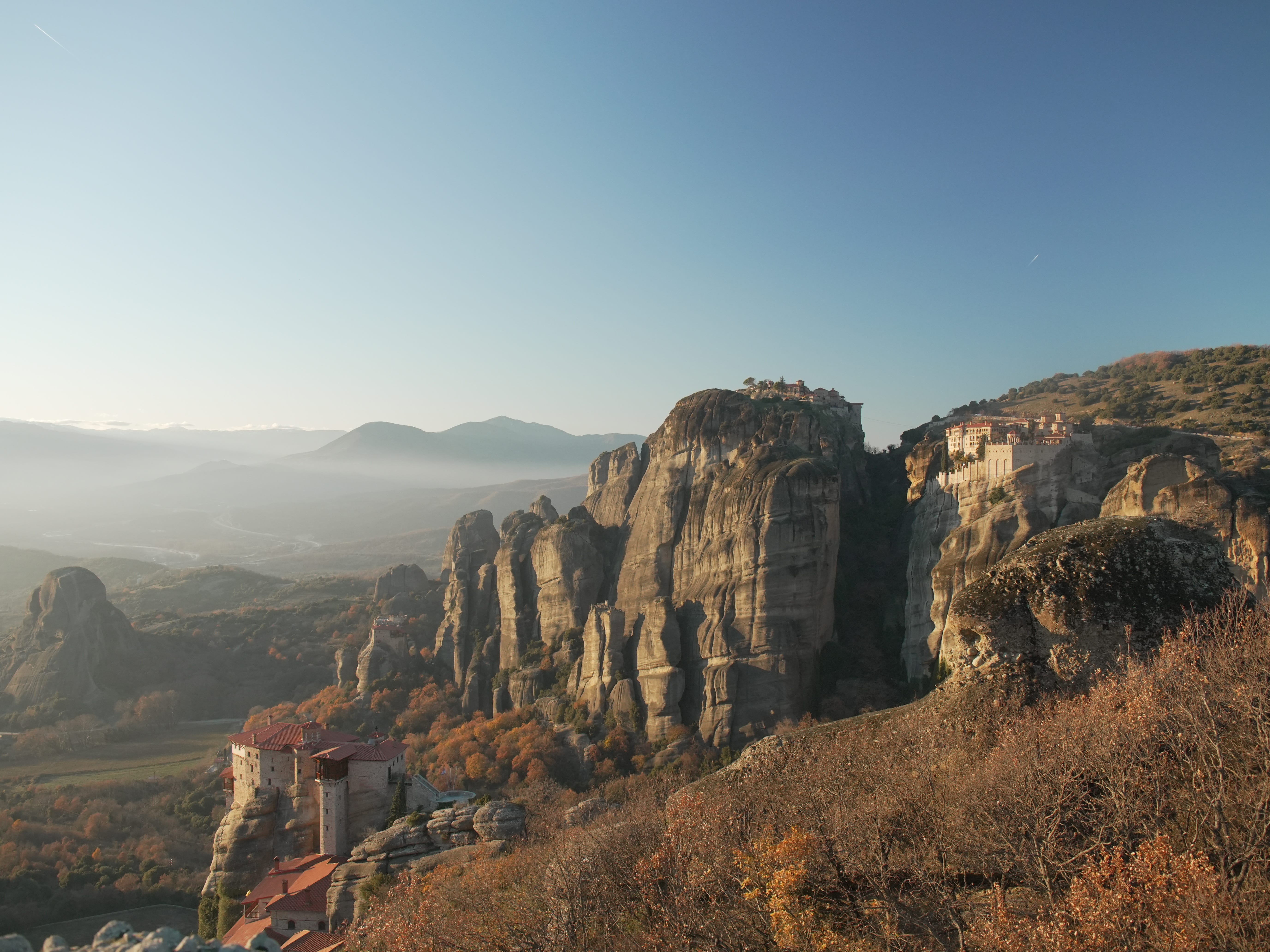
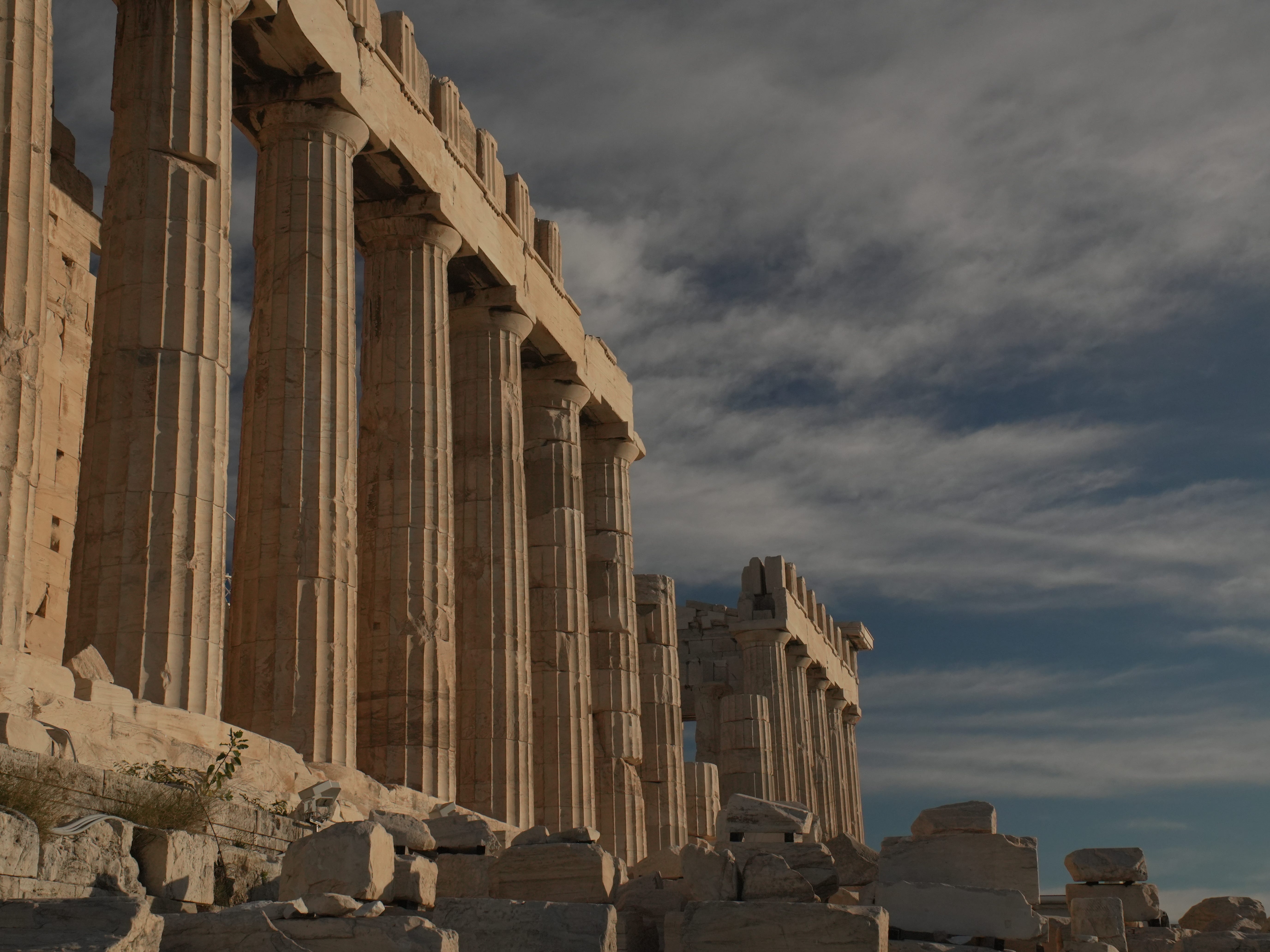
After the sketch shoot, my family joined me, and we took our daughters (and my mother-in-law!) on a road trip through Greece, visiting ancient temples, Delphi, the stunning natural rock formations in Meteora, and many other amazing sites. I believe there is nothing more important than raising worldly children who have learned to navigate places they don’t know using languages they don’t speak.
This is how my parents raised my siblings and me, taking us to live in Turkey, Italy, and other parts of the world, piggybacking on my father’s ancient architectural study.
I’ll never forget our Turkish 45-cent hotel rooms that had cardboard on the floor instead of carpets. Those experiences set me up for the necessary suffering of a NonDē filmmaker and allowed me to understand my struggles in a larger context.
Even when I’ve got it bad, I still have it pretty damn good.
About the Author:
Alan McIntyre is a cinematographer, teacher, and filmmaker based in New York City. Recent projects include MOTION (Bella Thorne, Tiffany Haddish, Terry Crews), A VIGILANTE (Olivia Wilde), and NECROPOLIS, which he is currently shooting in Greece. He directed the feature film STARGAZER and is currently making his first feature documentary, DINERMAN, with the FilmStack NonDē 50 project.
Thanks for the education! Just sent it to Ray, Vinny and John!